

Sindh has taken a major step towards a cleaner and more job-friendly future with the launch of the Sindh EV Taxi Scheme 2026. This new initiative is set to introduce electric taxis across the province, aiming to create income opportunities for youth while reducing fuel costs and pollution.
Backed by key institutions, the scheme promises easier financing, lower running expenses, and a shift towards green transport. From unemployed drivers to women seeking independence, many are expected to benefit. But how will this scheme work, and who can apply?
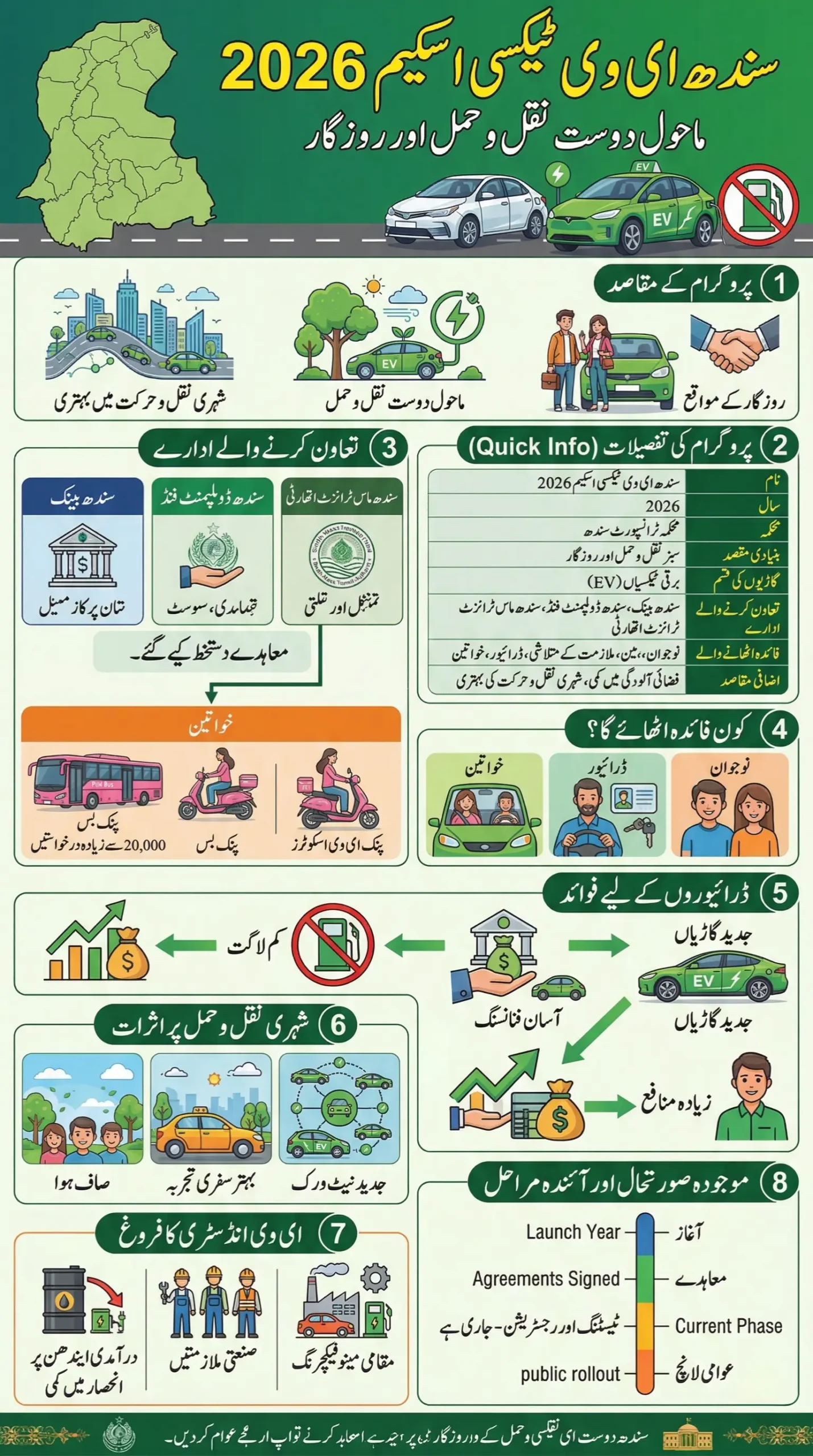
Quick Info Table
| Program Name | Sindh EV Taxi Scheme 2026 |
|---|---|
| Launch Year | 2026 |
| Announced By | Sindh Transport Department |
| Main Objective | Green transport and job creation |
| Vehicles Type | Electric Taxis (EV) |
| Supporting Institutions | Sindh Bank, Sindh Development Fund |
| Target Beneficiaries | Youth and job seekers in Sindh |
| Additional Goals | Reduce pollution and improve urban mobility |
What is the Sindh EV Taxi Scheme 2026?
The Sindh EV Taxi Scheme 2026 is a new government initiative aimed at introducing electric taxis across major cities of Sindh. The project focuses on providing modern electric vehicles to drivers so they can operate taxi services without relying on petrol or diesel.
Through this program, the government hopes to achieve three major goals:
- Create new employment opportunities for young drivers
- Encourage environmentally friendly transportation
- Improve the overall urban travel experience
Also Read:Pakistan Introduces Petrol Subsidy App 2026 – Know Who Will Get Cheap Fuel?
Agreements Signed to Support the Project
To make the project successful, several institutions have joined hands with the Sindh government. During the launch ceremony, agreements were signed with:
- Sindh Bank
- Sindh Development Fund
- Sindh Mass Transit Authority
These organisations will help provide financial support, infrastructure, and operational assistance for the EV taxi fleet. The collaboration means drivers may get easier financing options, while the government ensures proper regulation and management of the service.
Why Electric Taxis Are Important for Sindh
Urban areas like Karachi face serious issues including air pollution, traffic congestion, and high fuel costs. Electric taxis can help tackle these challenges.
Some key benefits include:
- Lower fuel expenses: Electricity is cheaper than petrol or diesel.
- Environment friendly: EVs produce zero tailpipe emissions.
- Quiet and smooth ride: Electric motors operate more smoothly.
- Reduced maintenance costs: EV engines have fewer moving parts.
For drivers, this could mean better profits. For passengers, it means cleaner and more comfortable travel.
Also Read: Himmat Card Online Registration & Latest Status – CNIC Check to Avoid Payment Delay 2026
Job Opportunities for Youth
One of the biggest goals of the Sindh EV Taxi Scheme 2026 is to generate employment. Many young people across Sindh struggle to find stable income opportunities, especially in urban areas. With the introduction of electric taxi services, thousands of drivers could get a chance to run their own transport business.
Possible benefits for drivers include:
- Access to modern electric vehicles
- Affordable financing options
- Support from government transport departments
- Long-term earning opportunities through ride services
For many families, this scheme could become a reliable source of income.
Expansion of Women-Focused Transport Initiatives
The Sindh government has already introduced several transport projects focused on women’s safety and mobility. One example is the Pink Bus Service, which provides safer travel for female passengers. These buses are operated by female drivers and conductors.
Similarly, the government also launched Pink EV scooters to help women travel independently and participate more actively in economic activities. Initially, around 150 women received licences for the scooters, but the response was overwhelming.
According to officials, more than 20,000 applications have already been received, and training programs are currently underway. This shows that women are increasingly interested in joining modern mobility initiatives.
Read More: Latest 2026 Update: Asan Karobar Scheme 2026 – Who Qualifies & How Much Loan You Can Get?
Government Push for Electric Vehicle Industry
The launch of the EV taxi project is also part of a larger vision to promote electric vehicle manufacturing in Pakistan.
If EV manufacturing grows locally, Pakistan could benefit in several ways:
- Lower cost of electric vehicles
- New industrial jobs
- Reduced reliance on imported fuel
- Stronger local automotive industry
This could eventually make electric transport more affordable for the general public.
Also Read: Big Update: Prime Minister Laptop Scheme Phase 4 Status Revealed – Check Approved or Rejected
Real-Life Impact: Why This Scheme Matters
For an average driver in Pakistan, the biggest problem is simple:
👉 Petrol mehnga hai, kamai kam hai.
With electric taxis:
- Charging cost is lower than petrol
- Maintenance is simpler
- Daily savings increase
For someone driving full-time, this could literally change their monthly income situation.
Also Read: Today Update: CM Apna Khet Apna Rozgar Portal Registration – Know Complete Guide
Expected Impact on Urban Transport
Experts believe that electric taxis could significantly improve the transport system in Sindh’s big cities.
Some expected improvements include:
- Cleaner city air and lower carbon emissions
- More ride options for passengers
- Better income opportunities for drivers
- A modern and technology-driven transport network
If implemented successfully, the scheme may also inspire other provinces to introduce similar EV taxi programs.
Final Thoughts
The Sindh EV Taxi Scheme 2026 represents an important step toward modern and sustainable transportation in Pakistan. By introducing electric taxis, the Sindh government is trying to solve multiple challenges at once, from unemployment to environmental pollution.
For young drivers, this initiative could open the door to new earning opportunities. For passengers, it promises a cleaner and more comfortable travel experience. And for the environment, it signals a positive shift toward green mobility.
If the project continues to expand and receives strong public participation, electric taxis might soon become a common sight on Sindh’s roads.